

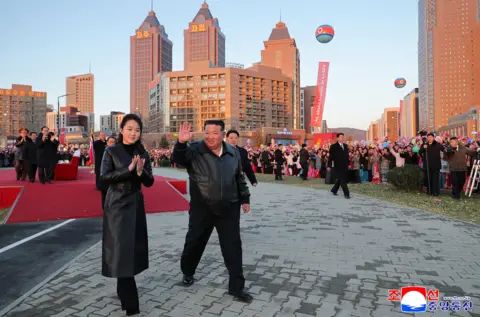
While pledges towards Seoul and vows to develop the atomic arms arsenal, a central question hovered at the ongoing party congress: would the supreme leader's 13-year-old daughter be anointed as the heir?
While unquestionable news failed to materialise at the event, it has ignited a significant conversation about the young girl's prospects as the next leader of the 25m-strong nation, a regime exclusively ruled by the Kim family clan.
Growing Public Profile and Analysis
The girl has become increasingly present in state media alongside her parent. Yet, plenty about her is still unknown. The regime has consistently refused to formally disclosed her name or verified her age.
She was originally made known internationally in 2013. Since then, she is widely thought to be 13 years old, based on analyst assessments.
Signs of Succession
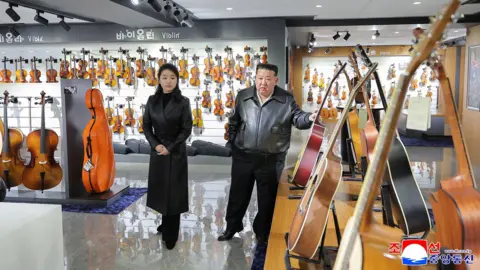
Analysts highlight several notable indicators. Her regular appearances—often centered in the frame—and the use of reverential titles usually set aside for the leader are seen as compelling evidence.
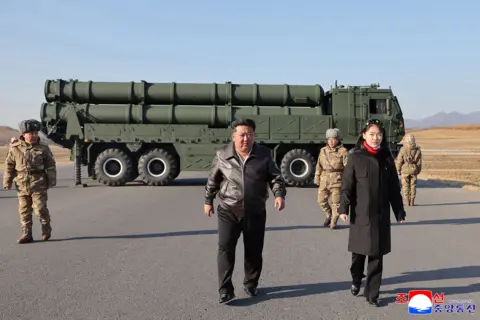
Furthermore, her proximity with the army is viewed another critical factor. She has inspected soldiers and weapons alongside her father. On several occasions, senior officers have been observed bending beside her to whisper during military displays.
"Official broadcasts is using terminology exclusively used for the ruler. It highlights her own cult of personality," notes one leading expert.
Such strategic familiarization is considered vital, as real control in North Korea rests with command over the military. To be a credible future leader, she must be seen as a capable figurehead.
Debate Over Sex and Custom
Nevertheless, a considerable opposing view is raised. Some analysts believe that North Korea's profoundly patriarchal system presents an formidable hurdle for a female supreme leader.
They point out that females at all rank struggle for fair recognition. Female leaders in senior offices are very rare. Widespread beliefs also highlight these biases.
"If they do, they complete the ride then go to the back of their car and spit multiple times to remove the bad luck," describes a ex- DPRK insider.
Changing Cultural Landscape
On the other hand, other researchers suggest that the position of females in North Korea has evolved significantly since the 1990s.
In that time, as the state economy faltered, females often became the main providers, engaging in informal business. This has apparently led to a slow change in societal dynamics.
One expert who has studied over 120 defectors suggests that it is currently less rare to see women in administrative positions within the state.

"We must not think of North Korea with our perspective. We must consider them as the royal court," says the expert. "What person would have the audacity to defy someone of Kim heritage who is assuming the leadership?"
Strategic Moves
Recent party appointments are also being analyzed. The elevation of Kim Yo Jong, the leader's powerful sibling, to a influential propaganda position is seen by some as a measure to install a protector for the possible successor.
Ultimately, analysts are in disagreement. Some view the attention on Ju Ae as a calculated tactic to soften the leader's image and normalize another dynastic transfer of power. Others insist the indicators of her preparation are sufficiently strong to ignore.
Regardless, the discussion itself may fulfill a function for the leadership, keeping outside focus firmly trained on the isolated Kim leadership.


